Judgment Day has an ominous sound. We likely have images of a bolt of lightning splitting open the heavens and then a frightening interrogation at the gates of eternity. The line is long, not moving, and we are at the very end. But we have little to no hope anyway. If there is a recounting of our lives, we are doomed. Even though these images prevail in society, should Christians be afraid of Judgment day?
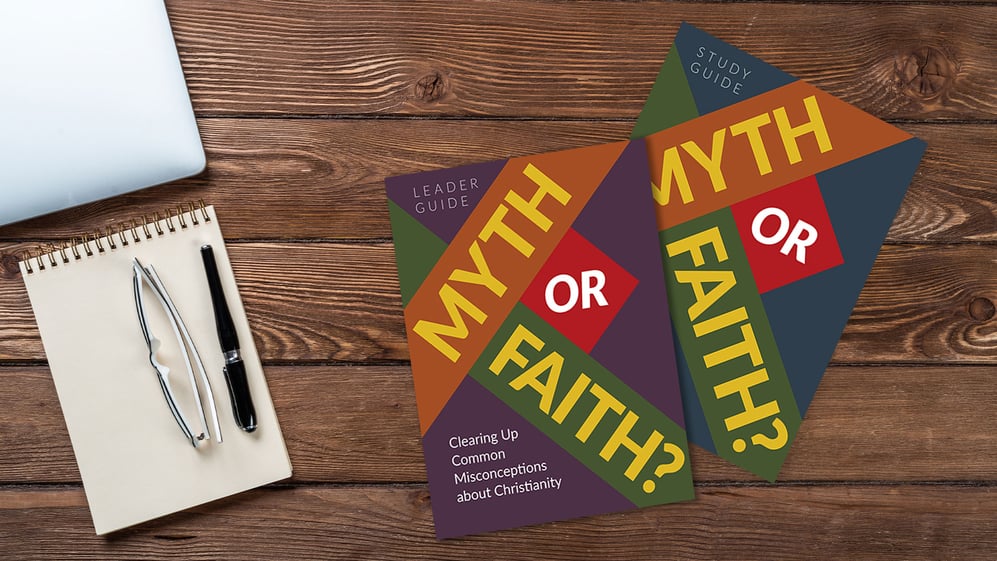
This blog post is excerpted from Myth or Faith: Clearing Up Common Misconceptions About Christianity.
The Picture from Scripture
Contrary to those images, the Scriptures give us a different picture. Jesus returns as the Shepherd to gather His sheep. He comes as the God who has already forgiven the world through His own sacrifice. His coming again is not a frightening day of doom but the day the church has eagerly awaited. He comes to raise the dead, gather His own to eternal life, and never let them go. We can say with the church for all time, “Amen. Come, Lord Jesus!” (Revelation 22:20).
Judgment Day could be the ultimate worst day on the calendar. If we picture Judgment Day as a thorough exam of our everyday, every act, and every word, then we naturally live in dread of it coming. And its coming is even worse than a chemistry test. At least you knew when the chemistry test was happening. But Judgment Day might come any day, any moment. Viewing Judgment Day that way, we would live under a constant cloud of doom.
However, that is not how God describes the return of Jesus and the gift of resurrection and the entrance into heaven for all who believe in Jesus as the Savior. We who live in faith in Jesus know that He will come to bring the resurrection of the dead and the entrance to heaven. With that faith, His coming is the best day we can imagine.
Saved by Grace Alone
If we were to read Matthew 25:31–46 alone, we might conclude that we are saved on Judgment Day by the charity and kindness we have shown in our lives. However, that view contradicts the truth that we are saved by grace alone, not by any of our works. See Ephesians 2:8–9 for this truth. The good that believers do is seen as good by God because of God’s grace. Note that in the Matthew 25 text, the believers are saved without any comparison between those who are saved. God’s justification of us through Christ’s work comes first so that any kindness we do is a result of being saved, not the cause of our salvation.
The kindness to others noted in Matthew 25 can be a witness to God’s greater mercy, which saves us. Notice that those who are saved are not expecting to be saved by what they have done. They are gathered as the sheep, the flock God has saved, by His choice and action.
Therefore, we can look ahead to Jesus’ return and Judgment Day as a time when God’s gracious promises will be fulfilled. He comes to lift our bodies from death to life and to gather us as His eternal flock, the people for whom He has prepared heaven.
When Christians face death, the Spirit brings us words that give hope. More than empty promises or fragile hopes, these are the strong promises of God.
Joy in the Face of Death and Judgment
What joy can the Christian have in the face of death? We can stand in awe that Jesus would choose to take on the death of the cross in order to save us. He had no need to die, and no one compelled Him to die—as it says in John 10:17–18, where Jesus makes it clear that His life is laid down and taken up again all by His choice. Because He has died and risen again, we who believe in Him will also die and then be raised. Death is not the end of life, but it is the doorway to the boundless blessings of heaven. God gives us life after death, all by His mercy, so that we don’t fear being condemned for our failure. We are saved by God’s promises and our union with Jesus through faith in His promises of life.
Facing both death and the judgment of God, we can’t stand on our own success. We can turn to the promises of God to save His own people, and we can also see those who have heard and believed those words that bring eternal life. What astonishing faith in the midst of a cruel death. We can have that same faith that Jesus is the King who died in our place and who will return in power and mercy.
What a joy that He who worked as a carpenter for decades now prepares a home for us in heaven. The certainty of that promise rests on the simple wood of the cross and His willingness to pay there for our entry into His kingdom. He took the lowest place so that He might bring us to the highest heights. He endured the cross for six hours so that we might spend eternity with Him.
Perhaps we might sum up our hope with the words of Romans 8:31: “If God is for us, who can be against us?” No enemy, no threat from past or an unknown future can tear us from His love and power. No one can silence the words of Jesus on our behalf. No debt can outdo the full payment for all our sins. The hope that God gives endures through this life into the eternal life He has promised.
The judgment of God has already been announced, and it has brought God’s forgiveness and peace. We have been declared righteous in God’s sight by the forgiveness won on the cross. That judgment of peace between ourselves and God cannot change since it is God’s own strong word. Therefore, we need not fear judgment since He has already given us His peace.
Blog post adapted from Myth or Faith: Clearing Up Common Misconceptions About Christianity, Study Guide © 2024 Concordia Publishing House. All rights reserved.
Scripture: ESV®.
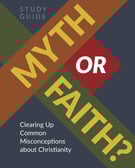 Find more answers to common questions about Christianity in Myth or Faith: Clearing Up Common Misconceptions About Christianity.