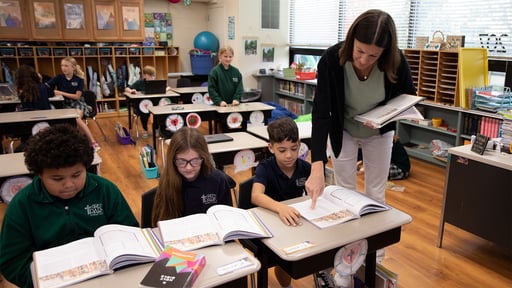
Teaching the Christian faith is central to the life of the church and takes many forms within congregations and schools. While parents play the primary role in shaping faith—especially for young children—the church also has many opportunities to walk alongside families and support children as they grow in faith. Keep reading for practical ideas your church or school can use for this purpose!
1. Bible Story–Centered Teaching
Young children naturally think in stories, so teaching the Bible through the stories within it is an effective way to begin teaching the faith. Sharing accounts (such as creation, Noah, Jesus’ miracles, and His crucifixion and resurrection) helps children grasp big truths in concrete ways. The key is repetition and connection: Rather than presenting isolated stories, show how they all point to Jesus and God’s promise of salvation. For example, even at ages 4 or 5, children can begin to understand themes like “God keeps His promises” as they appear across many Bible accounts.
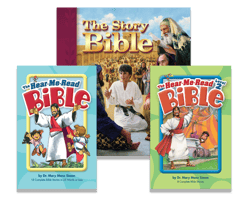 Some of my favorite Bible story books to help kids learn are the Hear Me Read Bible—which comes in two levels for early readers who are eager to read anything and everything—and The Story Bible, which is great for slightly older children.
One way to use Bible story–centered teaching in either a day school or Sunday School classroom is simple: consistently reading Bible stories. I love reading from the same story Bible each time. Kids get so excited when they see my Bible, and I think it helps engage them more fully as they listen. Younger children especially love it when the Bible you’re reading from is the same one they have at home. That connection can help spark excitement about reading the Bible even when they aren’t at church or school.
2. Tangible Object Lessons
A fun way to help kids understand faith concepts is through tangible object lessons! One of my favorite approaches is using a common household item to engage kids as they learn about the Bible and their faith in Jesus. Everyday objects give kids something familiar to hold on to while helping them see deeper connections in God’s Word.
One of my go-to object lessons uses cookies to talk about Adam and Eve and temptation. I talk about how much we might want the cookie sitting right in front of us—even when we’ve been told no.
Another fun option for tangible object‑lesson learning—especially for younger kids (typically ages 2–5, though my kindergarten friends still beg for them!)—is using puppets. Kids absolutely love my puppet friends!
In chapel, my friend Jelly helps children better understand their faith and Bible accounts. Puppets offer a fresh and engaging way for kids to hear these stories—something different from simply reading or retelling them. For Ash Wednesday, I used Jelly to help explain why we place the sign of the cross in ashes on our foreheads and how Jesus’ love and sacrifice on the cross has washed away our yucky sins.
My puppet Chatter used to join me in early childhood classrooms, where he would introduce the Bible story and then sit and listen along with us. Afterward, the kids even got to cuddle him—and they LOVED it! Children would stop me in the halls asking where Chatter was or excitedly wondering which Bible story he would help us learn about next.
Object lessons do not have to be super elaborate! Kids can be very visual and having something tangible for them to see and be able to connect with a faith concept or Bible story can be very helpful in cementing these things in their young minds.
3. Hands-On Sensory Learning
Abstract ideas like grace or forgiveness become clearer when paired with physical activities. Crafts, acting out stories, building simple scenes, or using visual aids (like a cross or baptismal imagery) help connect faith to real-world experience. For younger kids especially, learning by doing is far more effective than just listening. I love using crafts as an activity because this is a simple, fun hands-on way for kids to not only learn the lesson but also be able to take it home and use it to share the lesson with others.
One of my favorite examples of sensory learning is from our Lenten series last year. Every Lenten service I did a short children’s message, but after the service we had a “dig project.” This was an object that was connected to the message and Bibles verses used in the service and hidden in a sensory table of sand. Kids got to dig through the sand to find the objects and then collect the objects (along with a Scripture card to remind them of the lesson) every week to help solidify the lesson. The kids absolutely loved digging for the objects and seeing what this week’s object might be.
Another way hands on sensory learning can be valuable is through repetition. Using some of these things as a center rotation or bringing out some of these visual and sensory aids regularly can help reinforce the connection between the object and the faith concept that is being taught.
4. Music and Memorization
Children memorize things very well, especially through rhythm and melody. Teaching simple hymns, short Bible verses, and portions of the catechism helps form a foundation that sticks for life. Even if they don’t fully understand the words yet, they’re building a mental “library” they’ll grow into. Repetition through singing makes this both joyful and formative.
One of my favorite ways of sharing the faith through music is by teaching kids faith‑based songs. There are TONS of short, fun songs that help kids learn Bible verses, the books of the Bible, and more—and I love playing these songs throughout the day at many different times. For example, Concordia Publishing House offers Christ‑centered music and ready‑to‑use playlists on YouTube and Spotify, making it easy to bring faith‑filled songs into everyday moments.
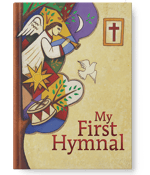
Another fun way to share the faith through song is by learning about hymns. I love using My First Hymnal to help introduce kids—especially young children through early elementary—to hymns while guiding them through 52 hymns and songs that deepen their understanding of faith and worship.
The power of memorization is often forgotten or not given enough credit. Memorizing helps kids better understand their faith, ask deeper questions about what they’re learning, and carry God’s Word with them so it can guide and shape their lives as they grow. I love using one Bible verse a week or month (depending on how long you have) to help the kids memorize Scripture. Even very small kids can memorize Bible verses or things like the Lord’s Prayer and the Christian creeds through repetition. I also like adding pictures or hand motions to engage different parts of the body and mind in committing these things to memory.
5. Engaging in Services
Whether it’s in church or chapel, helping kids truly engage in the worship service is formative for their faith. I love being able to let kids serve during services. One great way to do this is by inviting families to serve together on a Sunday morning—whether as greeters or ushers, or by having families read the Old Testament and Epistle readings.
In weekly chapel, having different grades help lead chapel—giving kids specific jobs or tasks, such as leading parts of the service—helps them feel more engaged in the life of the church. While these moments may not always directly teach faith concepts, they help instill the importance of worship, service, and fellowship.
Rooted in the Word, Guided by the Spirit
As we use different ways to help teach and reinforce the Gospel in the hearts and minds of our kids, I pray that you remember to let the Holy Spirit lead and guide you in this endeavor. Even through our imperfect efforts, the Holy Spirit is at work through God’s Word, helping children receive it, grow in understanding, and be shaped by the Gospel as it is faithfully shared.
Discover Christ‑centered children’s books from Concordia Publishing House to support faith formation at school, church, or home.



.jpg?width=50&height=50&name=IMG_20220621_160541_456%20(1).jpg)