
In the Letter of James, we see most clearly how constant and severe the struggle for renewal of strength and purpose must have been among the first Christians. The high qualities of this new life were not the once-for-all and static possession of the Church. They had to be constantly reclaimed and reasserted in repentance under the implanted Word of the Lord. The letter also shows how vigorously the leaders of the Judaic churches aided those churches in that struggle, with what agonized and conscientious consecration they strove to keep the Word once implanted in the Church implanted and active in the hearts of the members of the Church. We see what a concentrated energy of inspired pastoral wisdom, “wisdom from above,” went into the human word that ensured the growth of the Word of the Lord and gave it firm and deep roots in the lives and words and deeds of people.
The Letter of James shows us more clearly than the Book of Acts another important feature in the life of the Early Church: how thoroughly apostolic the “apostles’ teaching” (Ac 2:42) was—the mark of the apostle is that he is the voice and the representative of the Lord who sent him (Mt 10:40; Lk 10:16; Jn 13:20; 2Co 13:3), and we can see in the Letter of James how the very words of Christ were the basic substance of the apostolic teaching, the air that the Early Church breathed and lived by.
Historical and Cultural Setting
All manner of theories have been advanced to account for the Judaic and Christian aspects of the letter. … One fruitful suggestion that has a solid basis in the facts of James’s history is the following: James was a brother of Jesus and had witnessed Jesus’ work, but had not come to faith in Him until he was confronted by Him as the risen Christ, the “Lord of glory” (Jas 2:1). After his conversion, James worked in Jerusalem and sought to win Israel for the Christ and therefore kept the Church of Jerusalem within the framework of Judaism; he stayed in Jerusalem and confronted Jerusalem with the Christ until his countrymen killed him.
This history turned James away from all speculative wisdom and from everything that smacked of generality and theory. He saw in Jesus’ death and resurrection that he, James, with his ideas about God and Christ, had been in the wrong and that Jesus, who wholly loved God in word and deed, in life and in death, was in the right. He had seen how the “wise and understanding” (3:13) of his people had rejected Jesus because their theoretical knowledge about God had blinded them to God’s presence and God’s action in Jesus before their very eyes and in their very midst. And James saw that because Israel’s teachers and leaders thought they knew what the Messiah should be, they persisted in rejecting the Messiah proclaimed by the apostles and so led their people to refuse Him. James had learned, both in his own life and in the life of his people, how thoroughly a presumptive knowledge of God can lead a person astray and turn someone from God as He actually reveals Himself.
What James held fast as the best and dearest possession that Jesus had left him was Jesus’ call to repentance, that call which condemned Israel’s pride and Israel’s religious hypocrisy and proffered Israel God’s grace. Only by repentance (which in Jesus’ proclamation always includes faith) can someone come to God. … James taught his readers to heed and live it in the whole compass of the Church’s life—for only so will Judaism be brought to see that God is in the midst of the Church.
Arguments of Authorship
The only indications of authorship in the letter itself are (1) the name James in the salutation and (2) the general tone and character of its content. If we ask which of the various men named James in the New Testament could expect to be recognized and identified when he calls himself simply “James, a servant of God and of the Lord Jesus Christ” (1:1) and could speak with such massive authority to Judaic Christianity as he does in this writing, the most probable answer is James, the brother of the Lord. …
James had, like his brothers, refused to accept his brother as the Christ during His lifetime (Jn 7:5). It was apparently not until the risen Lord appeared to James that his doubts were overcome and he became the servant of Him whom he henceforth called “the Lord Jesus Christ” (cf 1Co 15:7; Ac 1:13–14). Active in the life of the Church from the beginning, he seems to have confined his work to Jerusalem. Possibly he undertook missionary journeys within Israel, like his brothers (1Co 9:5, which refers to the missionary travel of others). At any rate, it was in Jerusalem that he became and remained prominent. As early as AD 44, he was the acknowledged leader of the Jerusalem Church, as Peter’s words in Ac 12:17 show. … The picture we have of James in Acts is confirmed by what we find in the letters of Paul, who can refer to him simply as “James” and reckon on being understood (1Co 15:7); he practically ranks him with the apostles in Gal 1:19, and even mentions him before Peter and John as one of the “pillars” of the Church (Gal 2:9). James is, for Paul, so integral a part of the life of the Jerusalem Church that he can describe Jerusalem Christians who came to Antioch by saying, “Certain men came from James” (Gal 2:12). Jude can in his letter identify himself to his readers by calling himself “brother of James” (Jude 1). …
Purpose/Recipients
The Letter of James is addressed to Jewish Christians. The words of the salutation, “To the twelve tribes in the Dispersion” (Jas 1:1), in themselves do not necessarily mark the readers as Jewish, since the New Testament constantly appropriates the titles and attributes of Israel for the New Testament people of God (cf Gal 6:16; Php 3:3; 1Pt 1:1, 17; 2:9–10; Rv 7:4; 14:1); but these words are part of the generally Judaic coloring of the letter. The situation presupposed among the Christians addressed in the letter—that of a poor, tired, oppressed, and persecuted Church—corresponds to what we know of the Jerusalem Church of Ac 1–12; and what held for Jerusalem very probably held for other Jewish churches in Israel and in the Dispersion also. …
The Epistle of James shows that the author is acquainted with the situation of his readers, but no reference is so specific that it enables us to point to any particular event or set of circumstances as the immediate occasion for writing. Still, it is probably not accidental that the epistle opens with a summons to find cause for joy in “trials of various kinds” (1:2) and closes with an admonition to restore the brother who “wanders from the truth” (5:19). The “twelve tribes” are under the twin pressures of poverty and persecution; they are tempted to grow depressed, bitter, and impatient—depressed at the fate of the doomed people of which they remain a part, a fate that loomed ever more clearly and more terribly against the stormy skies of Israel; bitter at the fact that they are offering the grace of God in vain to this doomed people; and impatient for the “times of refreshing” and the restoring of all things (Ac 3:19–21), which the resurrection of Jesus Christ from the dead had promised and assured. …
Summary of James
James 1 James writes to struggling Christians who are facing many trials and temptations. Those who face such challenges may be tossed about (vv 5–8) and eventually destroyed by sin (v 15). Those who seek God’s wisdom endure trials (vv 2–4) and become stronger. James encourages Christians to return to the Word, take comfort in the Gospel, and live righteous lives focused on service toward others.
James 2 James rebukes an act that is inconsistent with the righteous life: judging others based on their appearance, wealth, or status. He also discusses a false understanding of faith: mere knowledge that has no application or effect on the one who has it. True faith and its response of true good works cannot be separated. Works naturally follow faith.
James 3:1–5:6 There are only two ways to live: by the “wisdom” of the world or by God’s wisdom. James condemns the worldly pattern of selfishness, deception, hurtful words, and other evil behaviors. Using the language of the Prophets, he teaches that rejecting God’s ways is spiritual adultery. Planning can be good stewardship, but not if our plans crowd out the things God would have us do. James reminds us to seek what “the Lord wills.” He condemns the wealthy for living as if this life is all there is to live for and as if Christ will not return. God’s Word repeatedly warns against this attitude.
James 5:7–20 The return of Jesus in glory shapes the Christian life. James calls sinners to repentance, and he exhorts the entire congregation to do the same. …
Martin Luther on James
In 1522, Luther made harsh statements about the Epistle of James. These statements have become notorious among scholars who have sometimes taken them out of context. The statements derive from Luther’s frustration with opponents who used Jas 2 to attack what Luther had learned about justification and sanctification while carefully studying the Epistles of Paul. The chief problem is raised by the way James and Paul use the same term (faith) and the same Old Testament history (examples from Abraham’s life) to illustrate very different points about the Christian life. …
However, a patient consideration of Luther’s statements yields the following important points:
-
Luther’s description of the book changes. In some cases, Luther describes James as the work of an apostle (e.g., his postil of 1536; WA DB 41:578–90), but in other cases, he argues that it was not written by an apostle.
-
When Luther describes James as “straw,” he is referring to its mundane, moral topics and not to its truthfulness. In medieval Wittenberg, straw was appreciated for its usefulness (e.g., Luther’s mattress was stuffed with straw), but it was also characterized as having low value (cf 1Co 3:12). So in his Preface to the New Testament, Luther is making a contrast between James and other New Testament epistles and is not dismissing James outright.
-
In Luther’s Preface to James, he describes the epistle as “a good book, because it sets up no doctrines of men but vigorously promulgates the law of God” (AE 35:395). But Luther also notes that the book lacks teaching on Christ, whom the apostles were to preach.
-
Despite his strong opinion and suggestion that the Lord’s brother James may not have written the book, Luther retains it as a New Testament Epistle. As the points above show, Luther was inconsistent in his opinions about James. …
Despite Luther’s early, harsh opinions and influence as an interpreter, the Lutheran Church has held that James is rightly part of the New Testament, citing its authority in the Book of Concord.
Blog post excerpted from Lutheran Bible Companion, Volume 2: Intertestamental Era, New Testament, and Bible Dictionary © 2014 Concordia Publishing House. All rights reserved
The quotation marked AE is from Luther’s Works, American Edition, vol. 35 © 1960 by Augsburg Fortress. Used by permission of the publisher.
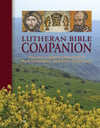 Read more about the book of James and the entire Bible by ordering Lutheran Bible Companion, Volume 2, below.







.jpg?width=50&height=50&name=IMG_20220621_160541_456%20(1).jpg)