
Why Certain Hymn Texts Endure

March 21, 2019
I live right outside Washington, DC, a transient area where a two-year resident is practically a seasoned veteran. This area recalls the constant movement of our culture and the idea that things simply do not last or even last long. In this day of discarding the barely used for the brand new, how do we ensure that our artistic endeavors in the Church last? Specifically, how can our hymn texts survive a rapidly changing culture?

The Praise of God in New Testament Songs and Hymns

February 12, 2019
This post is adapted from Praising God in Song by Carl Schalk.
The New Testament reflects in various ways both the content and vigor of the worship life of the early Christians. Among the excerpts from creeds, prayers, doxologies, and benedictions to be found in the New Testament are a variety of references to “hymns,” “psalms,” and “odes,” or “songs.” The very variety of terms suggests that no one “hymn form” was used exclusively.
The Histories of Some of Your Favorite Christmas Hymns

December 11, 2018
Did you know that one of the most famous Christmas hymns came about because a church’s organ broke just in time for Christmas Eve? Read on to learn about some of the season’s most well-known hymns.
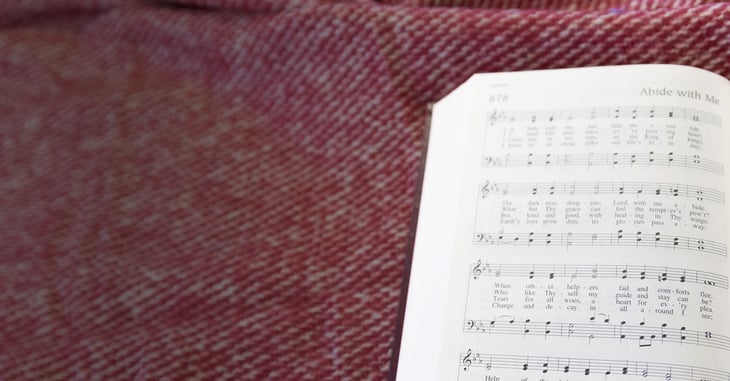
Evening Hymns for the Close of the Church Year
November 20, 2018
Abide with me, fast falls the eventide.
The darkness deepens; Lord, with me abide.
When other helpers fail and comforts flee,
Help of the helpless, O abide with me.
(“Abide with Me,” LSB 878, Stanza 1)
So was my family’s anthem nearly every evening when I was little. We made it our own with little added embellishments, as kids (and sometimes dads) are wont to do, and then scurried off to bed (always obediently and willingly, I might add—just don’t tell my mom I said that). Little did we know the preparation that was taking place, the ultimate preparation in life: we were preparing to die.

Prayer Hymns: One Immense Voice Raising Supplication to God
October 23, 2018
Have you ever attempted an extempore prayer? I know I have been in many situations in which someone calls upon me to offer a prayer, and I confess I don’t have many memorized beyond the basics (the Lord’s Prayer, Luther’s Morning and Evening Prayers, etc.). The ability to compose a prayer on the spot is important to learn, but oftentimes, previously composed prayers are more thorough and eloquent.
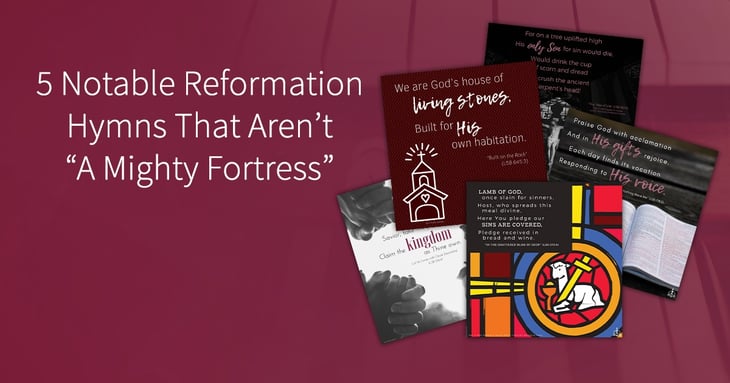
5 Notable Reformation Hymns That Aren’t “A Mighty Fortress”

October 9, 2018
It’s almost Reformation Day, and that means we get to enjoy hearing some of Lutheranism’s most famous hymns. (“A Mighty Fortress Is Our God,” I’m looking at you!) If you’re looking for some additional Reformation-related hymns to use around this time, consider using the ones mentioned below. We selected most of these by using the hymn search tool in Lutheran Service Builder with the keyword “Reformation.”
We also have created social media graphics with quotes from the selected hymns, and they are all shown below. At the end of the post, you can download the graphics for free and use them on your church’s social media accounts.
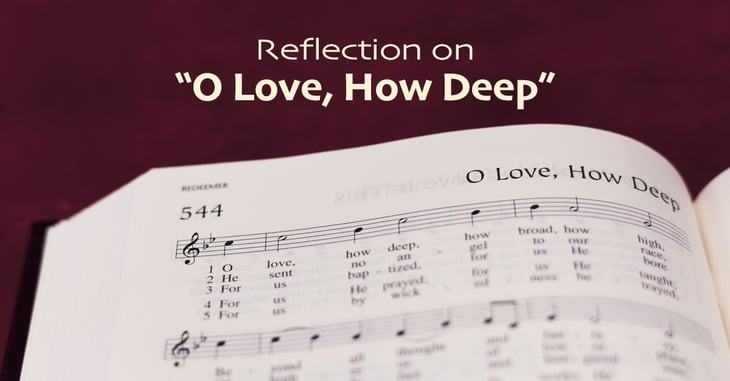
Reflection on “O Love, How Deep”
September 19, 2018
The Christian faith presents certain truths about Jesus Christ—His birth, death, and resurrection, to name a few—and teaches that these events were real. Many people consider our faith as simply believing in Jesus; however, Scripture tells us that even the demons believe in Jesus (James 2:19). Our faith rests on something deeper: Jesus became man, died, and rose for us. Perhaps no hymn speaks to this simple yet glorious truth better than “O Love, How Deep.”
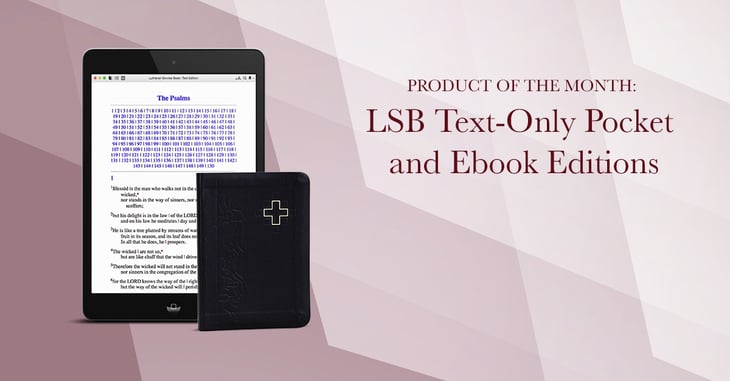
Product of the Month: LSB Text-Only Pocket and Ebook Editions

September 4, 2018
There’s no question that Lutheran churches often love tradition, and yet many churchgoers benefit from the options technology brings. Along that vein, CPH Music is excited to release two new editions of Lutheran Service Book. One is a pocket-size hymnal, which is reminiscent of generations past. The other is a text-only ebook, for those who are more future-minded.
Does the Memorization of Hymns Matter?
June 19, 2018
We often use music as a tool to memorize things, whether they’re presidents, books of the Bible, states, parts of grammar, the Small Catechism, or any number of other items. The rhythm of songs and the catchiness of melodies make music a convenient vehicle to relay and hold onto facts, stories, lists, and so on. Music in this way serves a great purpose.
But have you ever stopped to wonder why we memorize things? Sure, instantly recalling a fact or name is good and useful and usually speeds up the work that needs to be done. But is there a greater purpose to memorization? Does music’s ability to make memorization quick and easy contain a higher good than simply recollection of fact?
The Importance of Teaching Hymns to Children
May 22, 2018
Christianity is not a simple thing. As church musicians, we understand this and strive to use our music to help teach doctrine in all of its complexities and subtleties to congregants both young and old. In fact, what better way to prepare and teach our young people than by teaching them robust, doctrine-filled hymns?
Featured
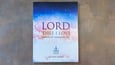
Music of the Month: Lord, Thee I Love: Partita on “Herzlich lieb”
3 Hymns for the Feast of St. Michael and All Angels—September 29

Music of the Month: My Beloved Sets for Me a Banquet from Above

Popular
The Doxology in Worship


How to Arrange the Sacred Vessels for Holy Communion

Altar Guild’s Guide to the Types of Communion Vessels