
Recent Posts by Nathan Grime
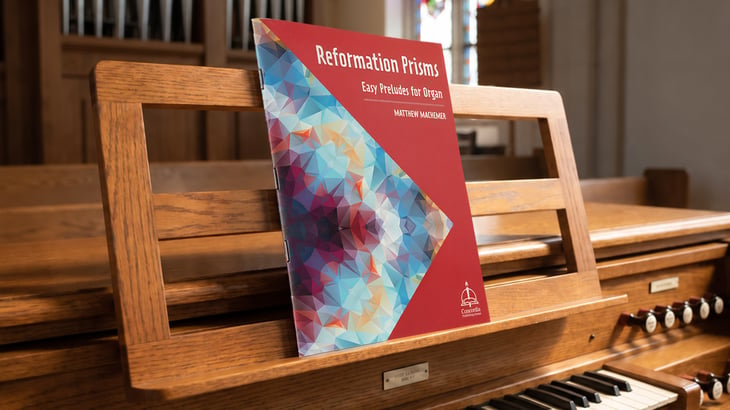
Music of the Month: Reformation Prisms

October 6, 2026
This dynamic organ collection, Reformation Prisms, launches Matthew Machemer’s new Prisms series, presenting bold, stimulating, and highly playable settings of six cornerstone hymns of the church, written with accessibility in mind. Machemer’s style blends rhythmic vitality, clean contrapuntal writing, and strong harmonic momentum. Each setting offers clear structure, satisfying climaxes, thoughtful melodic shaping, and registrations that allow organists to highlight the unique character of each tune. Whether used as hymn introductions, voluntaries, or service music, this collection provides organists with strong, engaging pieces that bring enduring hymn tunes to life with freshness and vitality.
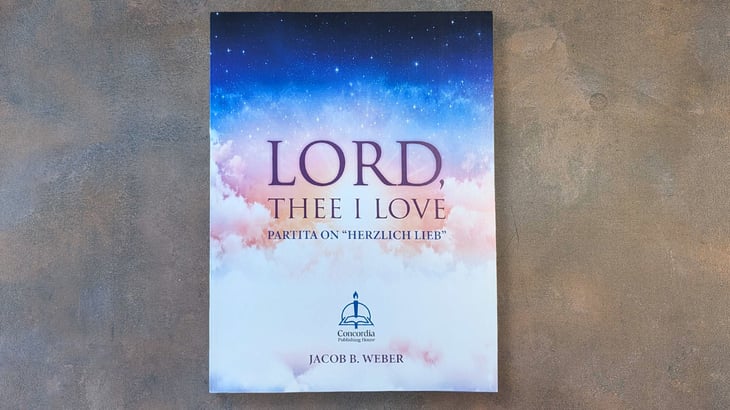
Music of the Month: Lord, Thee I Love: Partita on “Herzlich lieb”
September 8, 2026
Jacob B. Weber’s Lord, Thee I Love: Partita on “Herzlich lieb” offers a wide‑ranging and thoughtfully crafted exploration of the cherished hymn “Lord, Thee I Love with All My Heart.” Across seven distinct movements, the partita brings forward an array of colors and textures that highlight the depth and character of this historic tune. From a gentle introduction and a full hymn setting to a lively bicinium, atmospheric meditation, and spirited scherzo, each movement highlights a different facet of the melody. The partita concludes with a bold trumpet tune and an energetic, multi‑meter finale, providing organists with a versatile set suitable for service use or recital performance, with movements that work beautifully in sequence or individually.
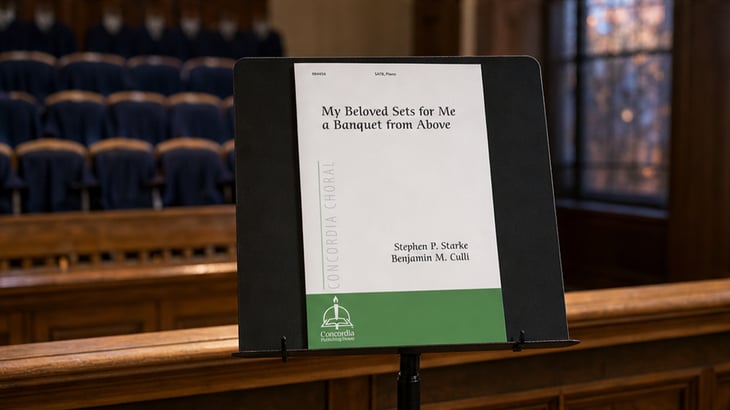
Music of the Month: My Beloved Sets for Me a Banquet from Above
August 11, 2026
Warm, expressive, and richly poetic, “My Beloved Sets for Me a Banquet from Above” by Benjamin M. Culli arranges Stephen P. Starke’s communion text with tender lyricism and gentle, unfolding beauty. Moments of expressive rubato and rising intensity culminate in a confident proclamation of Christ’s gracious invitation to His feast. This anthem is an excellent choice for Holy Communion, Maundy Thursday, or any service highlighting the comfort and generosity of the Savior’s Table.
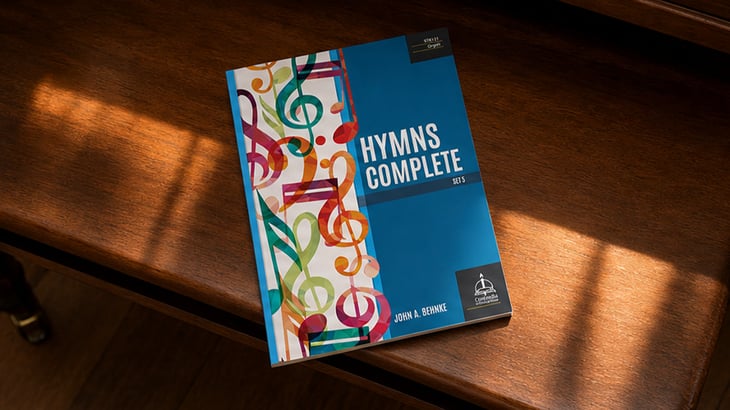
Music of the Month: Hymns Complete, Set 5
July 14, 2026
In this newest volume of the Hymns Complete series, John A. Behnke provides organists with fully orchestrated hymn settings—an introduction and a complete harmonization for every stanza of each hymn. Designed to eliminate the need for juggling multiple alternate‑harmonization books, each hymn is shaped according to the progression of its text, with musical treatments that highlight the character and message of each stanza. This set includes hymns for Advent, Christmas, Epiphany, Easter, Pentecost, and general praise, making it useful throughout the Church Year. This set continues to offer a “hymn festival in a book,” giving organists expressive, congregation‑supporting options for every stanza they lead.
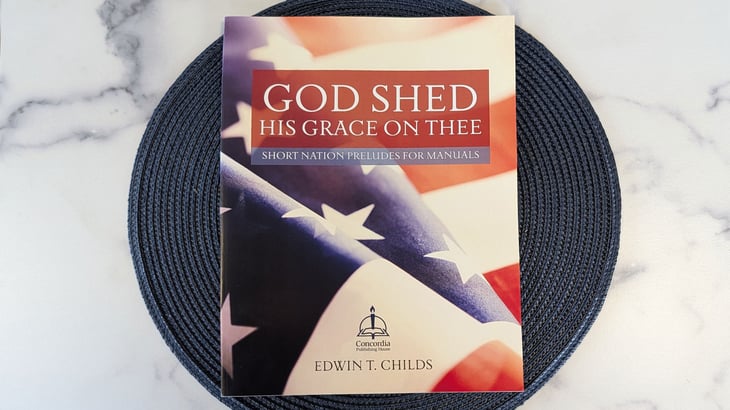
Music of the Month: God Shed His Grace on Thee
June 2, 2026
“God Shed His Grace on Thee” from Edwin T. Childs brings together thirteen rich hymn settings based on national hymns. Written for manuals and mostly two pages each, these pieces are playable on any keyboard instrument, including organ or piano, making the collection widely useful for church musicians in a variety of settings. The hymn choices encompass themes of national heritage, steadfast faith, divine protection, Christian hope, and trust in God’s care, making the book particularly valuable for both civic holidays and throughout the liturgical year.
Remembering Composer Paul Gerhardt 350 Years Later
May 27, 2026
Paul Gerhardt (1607–76) is in a tier only shared with Martin Luther as one of the most beloved and celebrated Lutheran hymnwriters in the church. May 27 marks 350 years since his passing in 1676, and yet seventeen of Gerhardt’s 100-plus hymn texts are still in Lutheran Service Book. His legacy is felt throughout the Christian church, living in numerous denominations’ hymnals and still ringing out in our heads as we repeat the tunes today. Learn more about this phenomenal contributor to hymnody to commemorate the anniversary of his passing.
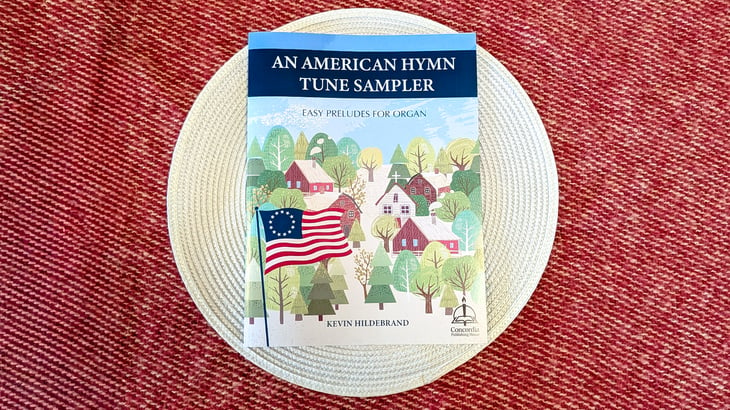
Music of the Month: An American Hymn Tune Sampler
May 5, 2026
Kevin Hildebrand’s collection of organ preludes on American hymn tunes is a timely publication in 2026 as the United States celebrates its semiquincentennial, the 250th anniversary of its founding. In those 250 years, American composers have made their distinctive mark on the musical landscape, especially through the folk and spiritual traditions.
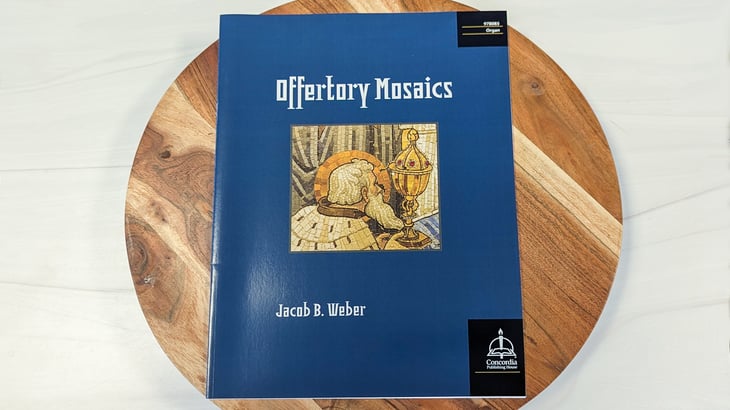
Music of the Month: Offertory Mosaics
April 7, 2026
Accent the Offertory with grace and joy using Offertory Mosaics, the latest addition to the long-standing Mosaics series by Jacob B. Weber. Six organ preludes provide fresh settings, with several pieces having built-in jump points for shortened versions, which make them especially flexible for use during the offering. Some highlights include an elegant Baroque-style “Create in Me a Clean Heart, O God,” a reverent and relaxed “Consider How the Birds Above,” and a triumphant “Take My Life and Let It Be.”
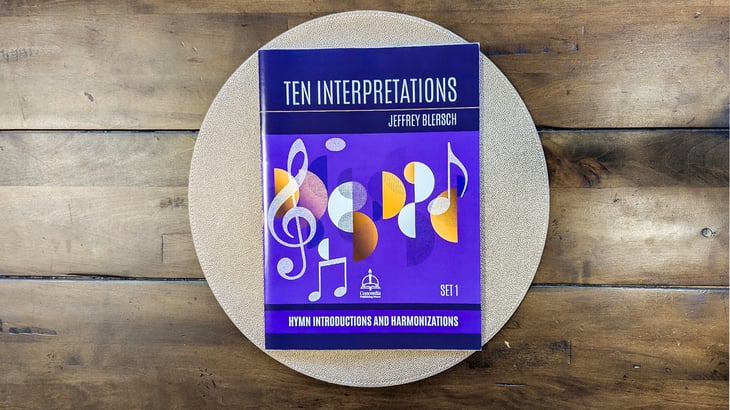
Music of the Month: Ten Interpretations Set 1
March 10, 2026
A trusted craftsman at leading engaging congregational singing, Jeffrey Blersch is at it again with a brand-new series of hymn introductions and harmonizations. In this series, ten hymns are treated with an introduction and one or more harmonizations, often with specific stanzas in mind, cementing the connection between words and music, and vividly bringing out the meaning of the text. Use these to uplift, inspire awe, and draw attention to what hymns say.
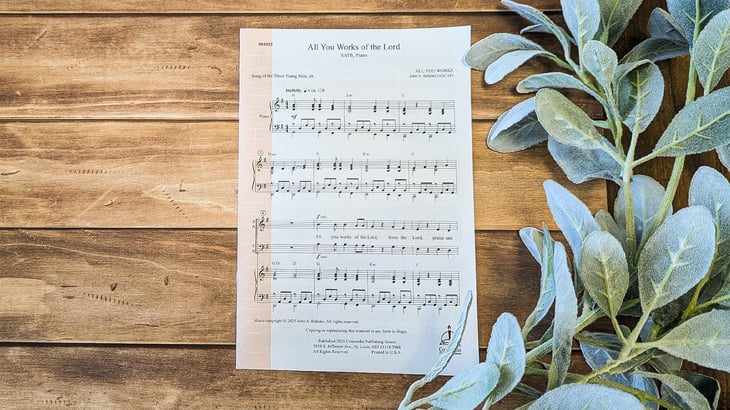
Music of the Month: All You Works of the Lord
February 10, 2026
Call on all of creation to bless the Lord with “All You Works of the Lord” by John A. Behnke. A memorable refrain, joyful piano accompaniment, and verses with great back-and-forth dialogue between voices make this piece unforgettable. This text, Song of the Three Young Men (Benedicite, omnia opera), is a feature of the Easter Vigil, so this piece is ideal for that service and is also a fitting selection throughout the Easter season.

Featured
Music of the Month: Reformation Prisms
Using the Full Set of One and All Rejoice Recordings in Your Classroom

Music of the Month: Lord, Thee I Love: Partita on “Herzlich lieb”
3 Hymns for the Feast of St. Michael and All Angels—September 29

Popular
The Doxology in Worship


How to Arrange the Sacred Vessels for Holy Communion

Altar Guild’s Guide to the Types of Communion Vessels