The start of the new school year can bring opportunities for new routines, patterns, and habits. But too often, our best intentions become unrealized goals when, three weeks after school has started, the healthy meal choices you were going to include in lunches or the exercise routine that you were going to do every morning or the thankful attitude you were going to embody this year gets lost in our normal patterns and rhythms. New habits are difficult to establish and can be harder to maintain. The same is true with faith practices.
To find success in instilling faith habits (or any habit for that matter) in your home, you need specificity, simplicity, strategy, and support.
Why Good Intentions Aren’t Enough
Several years ago, my family wanted to be more intentional about devotions. We had consistently developed a habit of prayer together. We had done devotions for short periods of time during Advent or Lent using Advent calendars or Lenten devotions, but those practices had not developed into a consistent habit. So, my wife and I decided we were going to do devotions every day for a year. It was a great goal. It’s what we needed to do to stay grounded in faith and God’s Word. It was also what we needed to do to connect better with each other and our kids. But, because it lacked specificity, it didn’t last.
Start with Specificity
For faith activities in the home to become faith habits, they need specificity. They can’t be vague like “we will pray together as a family” or “do family devotions.” They require specifics. To get to the needed specificity, use the following questions. The answers were ones that our family developed to get specific about our morning devotion time.
- What will we do? We will read the next Bible story out of The Story Bible at breakfast.
- When will we do this? Monday through Thursday mornings.
- How will we do this? Some of us will get up earlier so that we can all be at the breakfast table at 6:45 a.m. We will read the Bible story and answer questions. We will close with prayer.
- Who will do this? Mom, Dad, and kids. As Dad, I led until we had a routine established, then we began taking turns reading and asking the questions.
- Why are we doing it? To more regularly hear God’s Word, review Bible stories, and connect as a family.
Keep It Simple and Sustainable
But we needed more than a well-defined goal. We needed our habit to be simple and repeatable. We had to be able to develop the routine quickly. We needed to know what was next without complicated steps. It was going to be hard enough to start a new routine; the activity itself needed to not be difficult. That didn’t mean we couldn’t add elements later. We’ve added hymns and prayers and other activities to our established routines. But, at the beginning, we started very simply.
Build a Strategy for Success
To start a new faith habit in your home, you do need specificity and simplicity, but you also need strategy. You need strategy to get it started and to keep it going.
When starting something new, people find most success in establishing habits when they can connect the new habit to an existing habit. What habits does your family already have? Do you eat a meal together? Is there an evening routine for the kids? Do you have morning routines or car rides that you share? Consider adding a faith habit as part of this existing habit. You could add a Bible story and prayers after bathtime. During breakfast you could ask the same questions to help frame the day in Christ. After dinner you could lead daily prayer from the hymnal. In your car on the way to school, instead of listening to a specific morning show, you could listen to a devotion together. The reality is that it is easier to replace or add on to an existing habit than it is to create a new habit.
Another strategy when establishing habits is to celebrate small wins. Find some way to incorporate a reward. It could be that dessert doesn’t happen until we finish family devotions at dinner. Or we don’t get on our phones until after we have prayed at breakfast. It could be that we do family hugs as soon as we finish our hymn before bed. Or we take a deep, cleansing breath and share a smile when we finish our faith conversations at dinner. It does not need to be elaborate, but it should be something that positively reinforces the faith habit. Every night, I get to bless my boys after we pray together, and they receive a simple blessing reminding them of my love and the love of Jesus. This action after prayers brings me great joy, and it gives my boys a sense of peace.
It will take work to keep your faith habits going. Because you are connecting to Christ and His Word, the devil will try to distract you. Part of your strategy is to be ready for the distractions. Identify potential pitfalls and make a plan for overcoming them. What do we do when we have something scheduled over our faith practice time? When we are on vacation? When one of our family members is sick or has a bad attitude? When we have friends or extended family around? When we miss a day? Plan for all these things because they will happen. Know what you will do and follow through. You can include others in your faith habits; you can take your faith habits with you on vacation. You can have an attitude adjustment for yourself or help a child through one. You can do all these things, but if you aren’t prepared with a strategy, they can easily derail your faith habit.
Don’t Try to Do It Alone
Finally, to instill faith habits in your home, you will need support. Begin by talking to your family, beginning with your spouse. Explain what the desired faith habit is and why you want to implement it. Then share the plan with the rest of your household. If kids are older, then they, too, will need explanation, and even their input can be helpful not only in coming up with specificity and strategy but also in gaining their buy-in for the new habit.
You will also need support from outside of your family. Enlist the help of your pastor or another church worker. Ask them for resources, encouragement, and accountability. You can also connect with other families in your church. Share what you are doing and why, and ask them to join you. It can be easier to begin a new habit when you aren’t the only one doing it and when you know others will ask you how that habit is going.
Instilling spiritual habits in your home takes specificity, simplicity, strategy, and support. But it is worth doing. Not because we are saved by our faith habits—we are only saved by Christ—but we strive to instill these habits in our homes, in our lives and the lives of our kids, because through these practices we experience God’s grace and His Word, which help us to live faithfully even in the midst of the struggles and difficulties of life.
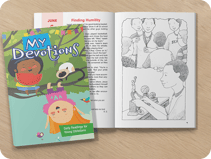 Need a simple, ready-to-use resource to support your family’s faith habit? My Devotions delivers age-appropriate daily devotions that help keep God’s Word part of your child’s everyday routine.